


rayman@sdrayman.com
0086-132-0538-3163
Customers all refer to products as "anti‑bedsore mattress", yet substantial product differences exist. Clear classification is a must before quotation.
| Type | Structure & Application |
|---|---|
| Static Foam Mattress | Multi‑layer structure of high‑density foam and memory foam. Pressure redistribution achieved via materials. No power supply and zero failure points. Lowest unit price with largest sales volume. |
| Static Gel / Fibre Mattress | Filled with gel layers or hollow fibres for enhanced comfort. Targeting mid‑to‑high‑end elderly care institutions. |
| Alternating‑pressure Air Mattress (with air pump) | Periodic inflation and deflation of air chambers by air pump to shift pressure points actively. Higher unit price, power‑dependent with after‑sales failure risks. |
| Micro‑airflow / Low‑air‑loss Mattress | High‑end therapeutic product for patients at high bedsore risk. High barriers in technology and certification. |
Key Insight: Active products equipped with air pumps bear dual attributes of medical device and electrical appliance, resulting in far higher requirements for certification, after‑sales service and return rates compared with foam mattresses. Using one quotation framework for all product categories is where many foreign‑trade enterprises start to lose money.
This market delivers relatively favourable unit prices and profit margins, yet with high entry barriers.
Demand Features: Bulk procurement by nursing homes, care houses and hospice facilities. Purchasing decisions focus on clinical evidence, complete certifications and after‑sales responsiveness.
Procurement Model: Access is mostly secured via local medical‑consumable distributors; direct deals with end‑user institutions are rare.
Competitive Landscape: Local and European‑American brands dominate the high‑end segment. Chinese products mainly compete in the cost‑effective segment, mostly undertaking OEM / private‑label manufacturing for distributors.
The region with the most prominent incremental growth. Rising private‑hospital expansion and middle‑class elderly‑care needs fuel fast‑growing demand for mid‑range products.
Price‑sensitive, while expecting professional‑looking appearance; fabric texture and exterior design are valued.
Certification requirements are relatively flexible, yet basic access documents will still be inspected during customs clearance.
Short procurement decision cycles, suitable for small‑batch and multi‑batch shipments.
Growing home‑care needs boost retail‑segment sales, a fast‑expanding track with totally different operation rules:
High packaging requirements: colour boxes, user manuals and multi‑lingual labels for end consumers.
Volume and freight become core cost items; volumetric‑weight‑based shipping charges may exceed product value.
Higher return rates than institutional channels; costs for product returns must be reserved.
Overseas warehouse fulfilment is preferred over conventional full‑container sea freight.
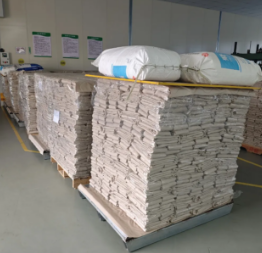
Anti‑bedsore mattresses are bulky yet lightweight. Both sea and air freight are charged by volumetric weight for bulky goods. Quoting based on actual weight for an order may eliminate gross profit or even cause losses.
| Common Mistake | Practical Consequence |
|---|---|
| Calculating freight by product actual weight | Freight doubles under volumetric‑weight billing; zero or negative gross profit |
| Ignoring outer‑carton dimensions after packaging | Actual carton size differs from benchmark data used for quotation |
| Mixed calculation for full‑container and LCL (less‑than‑container‑load) shipments | LCL freight is allocated by volume; freight accounts for an extremely high proportion in small‑batch orders |
Practical Advice: Measure actual outer‑carton dimensions before quotation and calculate freight following bulky‑goods formulas. Adopt vacuum‑compressed packaging to reduce volume for lightweight bulky goods. For small‑batch orders, fully compute LCL allocation costs; never quote using full‑container unit rates.
For active air mattresses with air pumps, air pumps count as electrical components. Confirm specifications for target markets individually:
Power specifications: voltage & frequency (110V/60Hz, 220V/50Hz), plug standards (US, EU, UK, AU, South‑African standards, etc.). Confirm requirements country‑by‑country before shipment; generic adaptors are not acceptable workarounds.
Electrical safety certifications: LVD and EMC directives under EU CE marking, US electrical‑safety requirements. Corresponding test reports are mandatory.
Energy efficiency for external power adapters: EU enforces dedicated energy‑efficiency regulations for external power supplies. Non‑compliant adapters will bar whole‑product market access — this requirement is most frequently overlooked.
Noise and continuous‑run performance: Air pumps need 24‑hour non‑stop operation. Noise level and long‑term operational stability directly influence customer complaint rates.
Reminder: Medical‑device classification judgements for anti‑bedsore mattresses vary across target markets. Most static mattresses are regulated as low‑risk products, while alternating‑pressure active systems are classified into higher‑risk categories in certain jurisdictions. Classification requirements, notified‑body involvement and pre‑market review obligations shall be assessed case‑by‑case according to actual product claims and working mechanisms instead of relying on past experience.
Foam mattresses barely generate after‑sales tickets, whereas air‑pump‑equipped products face frequent failures: air‑chamber leakage, tube‑joint disconnection, air‑pump diaphragm ageing and control‑board malfunctions.
Without well‑designed export after‑sales arrangements, customer complaints will translate directly into compensation claims or product returns:
Insufficient spare‑part supply: Air chambers and air tubes are high‑wear components. Spare‑part kits are recommended to be delivered together with goods proportionate to order volume.
Impractical on‑site repair: Return‑shipping costs exceed product value; returned units can only be scrapped locally in most cases.
Ambiguous user manuals: Most malfunctions stem from improper assembly or loose connections. Multi‑lingual illustrated manuals can drastically cut complaint rates.
Yes — but with proper positioning.
Discouraged Tactics: Chasing orders via rock‑bottom pricing, accepting all types of orders indiscriminately, mixing static mattresses and air mattresses, with no supporting after‑sales solutions. Such orders deliver high apparent sales volume yet razor‑thin margins; a single product return can wipe out profits for an entire year.
Recommended Tactics:
Tier quotations by sales channel: full‑container bulk orders for institutional clients; small‑batch orders with premium packaging for e‑commerce channels.
Separate management for static mattresses and air mattresses: independent certification documentation, quotation frameworks and after‑sales protocols for two product lines.
Mandatory after‑sales kits for air‑pump orders: deliver spare‑part kits, illustrated manuals and troubleshooting checklists together with shipments.
Finalise pricing only after full logistics evaluation: measure carton dimensions and calculate bulky‑goods freight prior to quotation, rather than working backwards.
Secure certifications country‑by‑country for target markets: never reuse certification documents from one jurisdiction for multiple markets, especially for electrical components.
The anti‑bedsore‑mattress category appears simple yet carries numerous hidden risks. Rising global demand is guaranteed by population ageing and home‑care trends. Profitability hinges on accurate logistics calculation for quotations, market‑specific certification compliance and complete after‑sales arrangements.
At Rayman, we operate full‑range anti‑bedsore‑mattress exports, covering static foam mattresses, gel mattresses and alternating‑pressure air mattresses. We support OEM & private‑label services, multi‑lingual manuals and order‑specific spare‑part kits with complete export qualifications. Overseas medical‑device distributors, elderly‑care institution purchasers and medical‑consumable distributors are welcome to enquire for product documentation and quotation proposals.
Contact: Sophy Gee
Phone: 0086-132-0538-3163
Tel: 0086-132-0538-3163
Email: rayman@sdrayman.com
Add: No.279, Longquan Road, High-Tech District, Taian City, Shandong Province
CopyRight 2016-2026 Shandong Rayman Medical Systems Co., Ltd POWERED BY YUKE Sitemap

We chat
